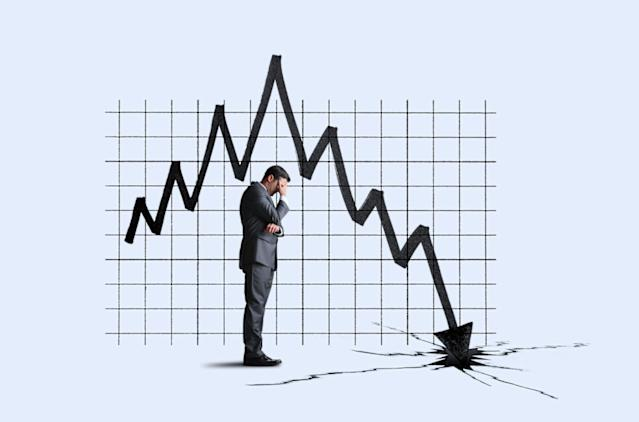
When markets become volatile, it doesn’t just affect portfolios—it affects people.
Headlines get sharper. Opinions get louder. Predictions become more urgent. And suddenly, doing nothing feels like the hardest decision of all.
But this is precisely where long-term financial thinking matters most.
Market turbulence is not an exception. It’s part of the design.
If you zoom out, every long-term chart includes periods of uncertainty, decline, and recovery. Think 2008 and 2020 for example. In both cases, the decline was catastrophic, but the recovery faster than anticipated. Post 2008 to 2020 was one of the longest bull markets in history.
Yet in the moment, those periods rarely feel “normal.” They feel different. Exceptional. Like this time might be the one where things don’t recover.
That feeling is what leads to costly decisions:
- Selling after a drop
- Waiting for “clarity” that never comes
- Trying to time a re-entry point, i.e. timing the market
The challenge isn’t a lack of information—it’s an overload of it.
In a click-driven environment, extreme views get amplified. Calm, steady guidance doesn’t. But long-term financial success is rarely built on reacting to noise. It’s built on consistency.
Staying the course doesn’t mean ignoring reality. It means trusting a plan that was designed with volatility in mind.
If your strategy only works when markets are calm, it’s not a strategy—it’s a fair-weather assumption.
Instead, ask yourself:
- Has my financial situation fundamentally changed?
- Was my plan built for long-term goals?
- Am I reacting to data—or to emotion?
Because the real risk in turbulent markets isn’t volatility itself.
It’s abandoning a sound plan at exactly the wrong time.
The investors who succeed over time are not the ones who avoid uncertainty. They’re the ones who learn to sit through it—without constantly needing to act.
Sometimes, the most productive financial decision you can make… is to stay exactly where you are.
 The Money Savvy Blog